


Under French value-sharing legislation, from 1 January 2025 every company with 11 employees or more must offer an employee savings scheme.
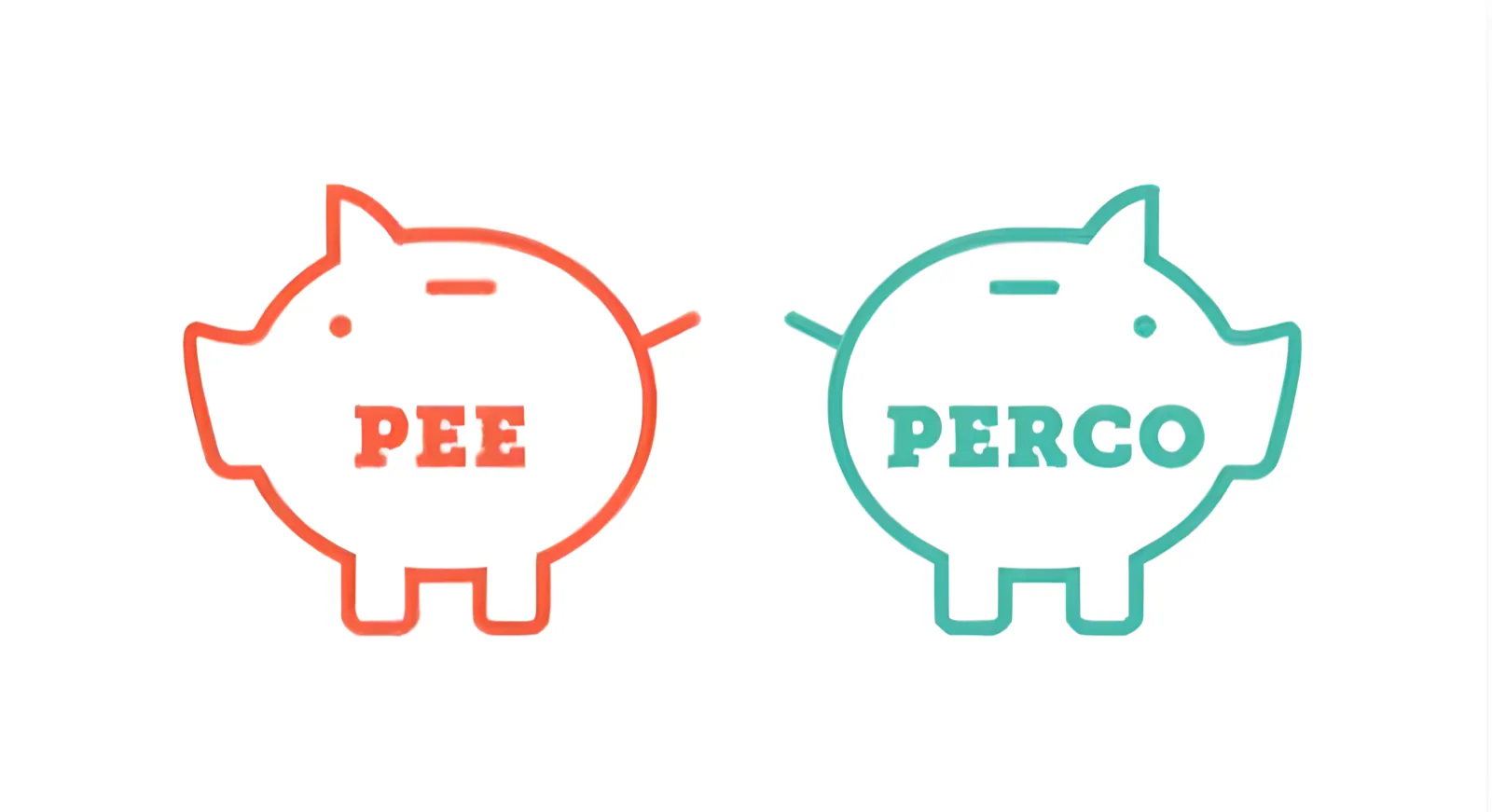
Employee savings in France are made up of:
We help companies with at least one employee set up a PEE and a PERECO, which we then manage.
The advantages are considerable, and the range of investment options we offer is both wide and carefully selected:
Paying an ordinary bonus is expensive: the sum bears employer and employee social charges, then income tax. A large share of the company's effort never reaches the recipient's pocket. Employee savings schemes answer precisely that problem: for the same cost to the company, the net amount received is markedly higher, thanks to favourable tax and social treatment.
They are also a powerful retention tool in competitive sectors and, a point often overlooked, a way for the director to build savings on very advantageous terms.
Yes, subject to headcount. This is the single most decisive and least known point in the whole subject. As soon as the company employs at least one person besides the director, the director can generally benefit from the schemes in place on the same footing as the team, including the employer's matching contribution, paid by their own company.
For the head of a small or medium-sized business, this is frequently the most efficient way to draw supplementary income and build savings, compared with a bonus or a dividend distribution. It is the first thing we check during the audit.
Optional, an incentive scheme ties a collective bonus to performance targets defined in an agreement: profit, productivity, quality, or non-financial objectives. It is deductible from the company's profit and benefits from reduced social charges. It is the most flexible arrangement, since the company sets the formula freely.
This redistributes a share of profit to employees. Compulsory above a certain headcount, it can be introduced voluntarily below. Its calculation formula is laid down by law, which makes it more rigid than an incentive scheme but equally advantageous in tax terms.
The PEE is the receptacle: it receives incentive payments, profit-sharing, voluntary contributions and employer matching. Sums are locked for five years, with many early-release cases : buying a main residence, marriage, the birth of a child, termination of employment. Gains benefit from privileged tax treatment.
The same logic as the PEE but oriented towards retirement: funds are locked until you retire, apart from the purchase of a main residence. It allows larger contributions and combines well with an individual PER. See our page on retirement and estate planning.
This is the multiplier. The company tops up the beneficiary's contributions according to a rule set in advance, up to a ceiling. Matching is deductible from profit and escapes ordinary social charges: it is the most profitable mechanism of the whole set, for employees and director alike.
| Scheme | Status | Lock-up | Main strength |
|---|---|---|---|
| Incentive scheme | Optional | None, or 5 years if paid into a PEE | Free formula, tied to performance |
| Profit-sharing | Compulsory above a headcount | 5 years | Regulated profit sharing |
| PEE | Optional | 5 years, many release cases | Central receptacle, light taxation |
| PERECO | Optional | Until retirement | High ceilings, retirement focus |
| Employer matching | Optional | Follows the plan funded | Deductible, socially light |
Implementation follows four stages. We first determine the right combination for your headcount, your profitability and your objectives : staff retention, supplementary income for the director, retirement provision. We then draft the agreement, which sets the calculation formula, the beneficiaries and the matching rules, together with the required filings. We select the account administrator and the associated investment range, on an open-architecture basis. Finally we handle ongoing management: informing beneficiaries, adjusting the agreement and reallocating investments.
Constellation Patrimoine handles the process end to end and coordinates with your accountant. The first discovery meeting is free.
Written by Mevlana Yildirim, founder of Constellation Patrimoine, a French Financial Investment Adviser (Conseiller en Investissements Financiers), registered with ORIAS under no. 26006339. Offices at 11 Avenue de Friedland, 75008 Paris, and through Mevlana Investments LLC in Dubai, first discovery meeting free of charge. General information for guidance only; this does not constitute personalised advice.
Profit-sharing becomes compulsory above a certain headcount. Below that, every scheme, incentive plans, profit-sharing, company savings plans, collective retirement plans and employer matching, remains optional but can be set up voluntarily, which is often highly advantageous for a small business and for its director.
Yes, subject to headcount: as soon as the company employs at least one person besides the director, the director can generally benefit from the schemes in place, employer matching included. For the head of a small or medium-sized business this is frequently the most efficient way to build savings, compared with a bonus or dividends.
Funds are locked for five years in principle, but the law provides many early-release cases: buying a main residence, marriage or civil partnership, the birth or adoption of a third child, termination of employment, disability, over-indebtedness. A collective retirement plan is locked until retirement, apart from the purchase of a main residence.
An incentive scheme is optional and its formula is set freely by the company, based on performance targets it chooses. Profit-sharing redistributes a portion of profit under a formula laid down by law and becomes compulsory above a certain headcount. The two can be combined and both benefit from favourable tax and social treatment.
The set-up cost is modest relative to the benefit obtained, and most of the cost corresponds to the sums actually paid to beneficiaries, sums that are deductible from the company's profit. The first discovery meeting is free and allows us to cost precisely the arrangement suited to your situation.

An exploratory meeting to assess your financial situation and see how we can help, at no cost and with no obligation.
01Together we set out the terms of our partnership and put forward tailored solutions suited to your circumstances.
02Access carefully selected investment opportunities and grow your wealth towards your objectives, with support at every step.
03

