


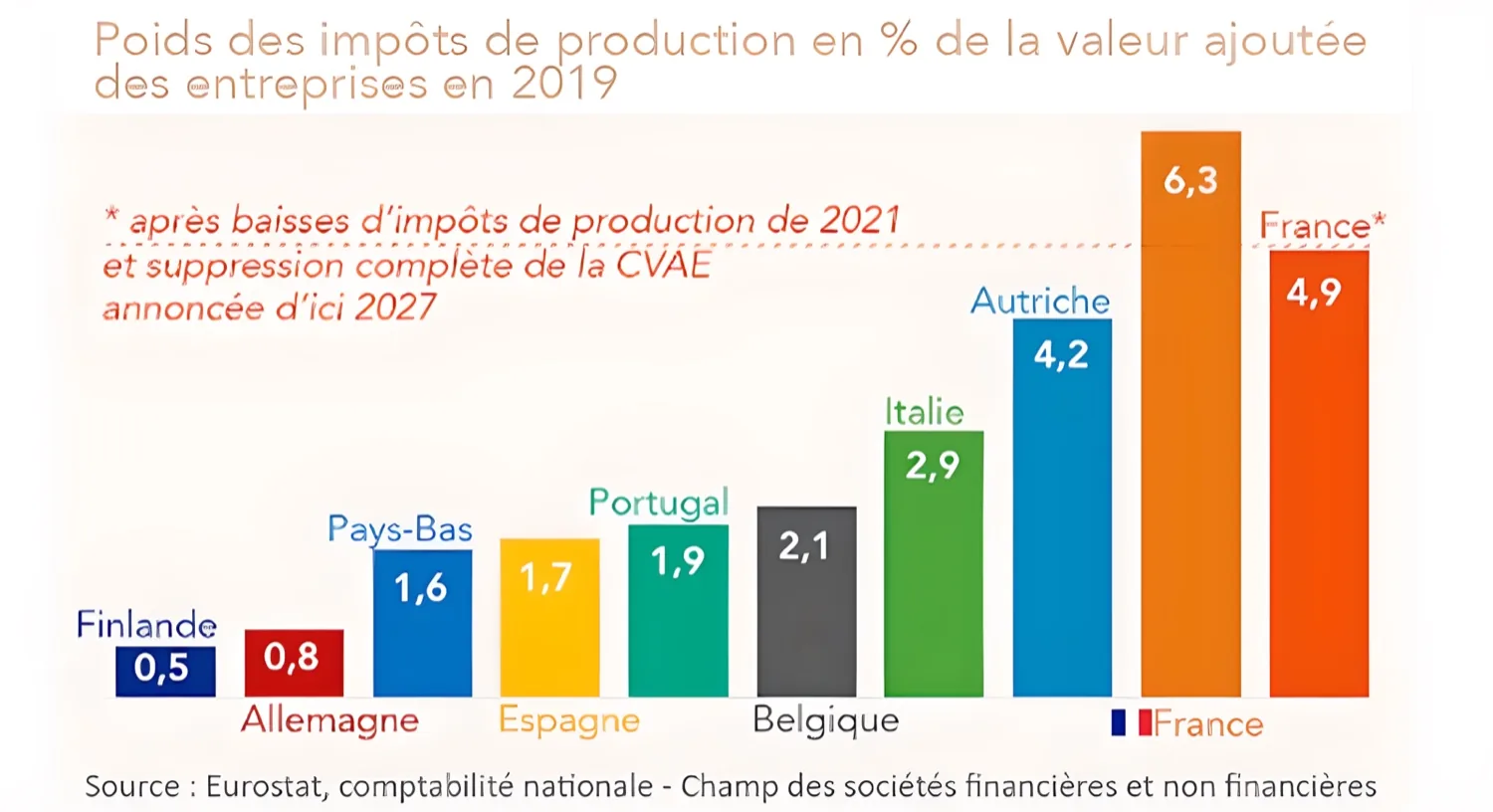
France taxes businesses more heavily than any other OECD country, once every levy is counted : corporation tax, production taxes, apprenticeship levies and the rest.
We help companies reduce their tax burden as far as the law allows.
Girardin IS is one such solution, reducing corporation tax while investing in property at the same time.
Girardin IS is a relief scheme allowing a mainland company subject to corporation tax to deduct from its taxable profit, in the same year, a sum greater than the amount actually invested, through an ethical investment located in France's overseas territories.
Because it is aimed at companies, no cap applies to this type of investment. Girardin IS, used to finance industrial projects overseas, therefore delivers a reduction in corporation tax, a purely fiscal benefit.
Depending on the amount invested, Girardin IS can reduce corporation tax by up to 40% over three years.
We focus on Réunion, the most economically dynamic of the overseas departments.
The structuring is handled with a tax lawyer and the client's own accountant.


The distinction is clear and worth stating at the outset. Tax optimisation means using the mechanisms set out in the tax code to reduce the burden legally: choice of legal form, the balance of remuneration, preferential regimes, savings schemes. Fraud means concealing taxable income, and is punished as a criminal offence.
Between the two lies what the authorities call abuse of law: an arrangement that is legally valid but devoid of any economic justification, whose sole purpose is fiscal. That is the line never to cross. At Constellation Patrimoine every structure must answer a genuine economic and wealth-planning logic, with the tax benefit as a consequence rather than the objective.
This is the most frequent question, and the one that shapes everything else. There is no universal answer, because the two routes carry neither the same cost nor the same trade-offs.
Salary is deductible from the company's profit, which lowers corporation tax, and it builds pension and protection entitlements. In exchange it carries significant social charges. Dividends are not deductible, they are paid out of profit already taxed, but bear generally lower levies. Their major drawback: they create no social entitlements at all, no pension, no protection, no sickness benefit.
| Criterion | Salary | Dividends |
|---|---|---|
| Deductible from profit | Yes | No |
| Social charges | High | Lower, varying by status |
| Pension entitlement | Yes | None |
| Cover if unable to work | Yes | None |
| Regularity | Monthly and predictable | Annual, dependent on profit |
The optimal answer is almost always a mix: enough salary to build social entitlements and protect the director, topped up with dividends. The right proportion is calculated from your status, your income needs and your retirement horizon, see our page on retirement and protection.
A holding company holds the shares of one or more trading companies. It offers three main advantages.
First, dividends can flow up almost entirely free of tax under the parent-subsidiary regime, allowing cash to circulate between group entities without significant friction. Second, subject to conditions, the profits and losses of different companies can be offset within a tax-consolidated group. Third, and often the decisive reason, it allows a sale to be anticipated: the contribution-and-sale mechanism defers tax on the capital gain, provided part of the proceeds is reinvested in a trading activity.
A holding company is not a universal answer. It brings set-up and running costs, governance that must be formalised, and a need for real economic substance. It generally becomes worthwhile when significant dividends flow up regularly, when several companies exist, or when a sale is envisaged within a few years. Creating one after a sale has been signed is too late.
A loss in one financial year can be set against future profits, or in certain circumstances against the previous year. Careful timing of costs and investments allows the most to be made of it.
Profit-sharing, incentive schemes, company savings plans and employer matching distribute purchasing power to the director and to employees with far more favourable tax and social treatment than an ordinary bonus. It is often the most profitable and the most underused lever. See our page on employee savings schemes.
Holding your premises through a property company rather than on the trading company's balance sheet builds private wealth funded by the rent, keeps the asset outside the scope of a future sale, and prepares the ground for succession. The tax regime chosen for that company is decisive and should follow a simulation.
Putting surplus cash to work generates investment income where inaction generates a loss of value. See our page on investing corporate cash.
We carry out a full tax and wealth audit of the company and its director, then present costed scenarios: total cost to the company, net income received, social entitlements built up and the effect on your private wealth over several years. All of it is set out in a written recommendations report. We implement in coordination with your accountant and your lawyer, then monitor progress with a quarterly review.
Written by Mevlana Yildirim, founder of Constellation Patrimoine, a French Financial Investment Adviser (Conseiller en Investissements Financiers), registered with ORIAS under no. 26006339. Offices at 11 Avenue de Friedland, 75008 Paris, and through Mevlana Investments LLC in Dubai, first discovery meeting free of charge. General information for guidance only; this does not constitute personalised advice.
Optimisation uses the mechanisms provided by law to reduce tax legally: choice of legal form, the balance of pay and dividends, preferential regimes. Fraud conceals taxable income and is a criminal offence. Between the two sits abuse of law: an arrangement that is legally valid but has no economic justification and exists solely for tax purposes. That is the line never to cross.
There is no numerical threshold. A holding company becomes relevant when significant dividends flow up regularly, when there are several companies, or when a sale is contemplated within three to five years. It carries running costs and requires genuine economic substance, so the decision follows a costed simulation.
Almost always a mix of the two. Salary is deductible from profit and builds pension and protection entitlements, but carries high social charges. Dividends are more lightly charged but create no social entitlements at all. The right balance depends on your status, your income needs and your retirement horizon, and is calculated case by case.
Optimisation based on legal mechanisms and justified economically carries no particular risk. Risk arises from artificial arrangements with no substance, which may be characterised as abuse of law. That is why we never undertake a structure that does not answer a genuine economic and wealth-planning logic.
Always. Your accountant knows your accounts and handles the filings; we bring the wealth dimension and the long-term view of the company and its director together. Recommendations are shared and agreed jointly before anything is implemented.

An exploratory meeting to assess your financial situation and see how we can help, at no cost and with no obligation.
01Together we set out the terms of our partnership and put forward tailored solutions suited to your circumstances.
02Access carefully selected investment opportunities and grow your wealth towards your objectives, with support at every step.
03

